Not so Goodreads
June 24, 2024
It almost feels right that the app to track your reading is bad
It’s clear the Goodreads app is the sole reason behind the widespread short attention spans and the general aversion to spending time reading.
— obviously I don’t believe this wholeheartedly, but it’s hard to ignore the potential impact this app is missing out on. We’ve witnessed the transformation of solitary activities into rich and engaging social online experiences — be it tracking watched films on Letterboxd, learning languages on Duolingo, or exercise on Strava.


Letterboxd, Duolingo, and Strava
Goodreads, an Amazon acquisition once envisioned as the future of book reviews has been criticized recently. Many headlines revolve around the product’s challenge with review bombing. It has more or less been an aging product since it’s inception, and even Amazon seems to be backpedalling on their support for it.
However, maybe the headlines have it wrong. What might really be holding back a growing demographic of tech-savvy readers isn’t the contention that’s making headlines, but the need for a quality experience on iOS.
Rather than focus on the controversy, let’s blow the digital dust of Goodreads’ iOS story and discover some missed opportunities and improvements for users that value excellence in their iOS products.
While researching this product area, I came across the app Bookshelf that corrects nearly all of what Goodreads gets wrong. You can even download your Goodreads data and import it into the app.
Poor habits on iOS
Goodreads’ settings experience
Rather than embracing iOS best practices, the app retrofits their website’s settings on their app, disrupting common iOS pattern.
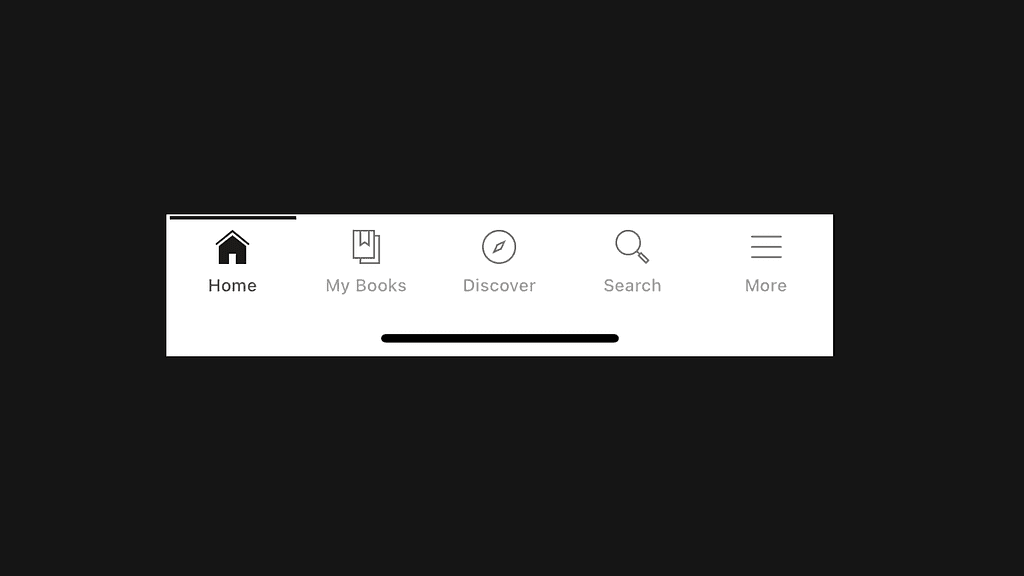
Goodreads bottom navigation bar
Apple’s developer guidelines recommend avoiding catch-all ‘Home’ and ‘More’ labels in bottom navigation bars in favor of more descriptive options.
Drawer triggered by the ‘More’ navigation item
The ‘More’ ellipsis, which opens a bottom sheet, stands out as an anomaly among the tabbed and paginated navigation model.
Flawed design
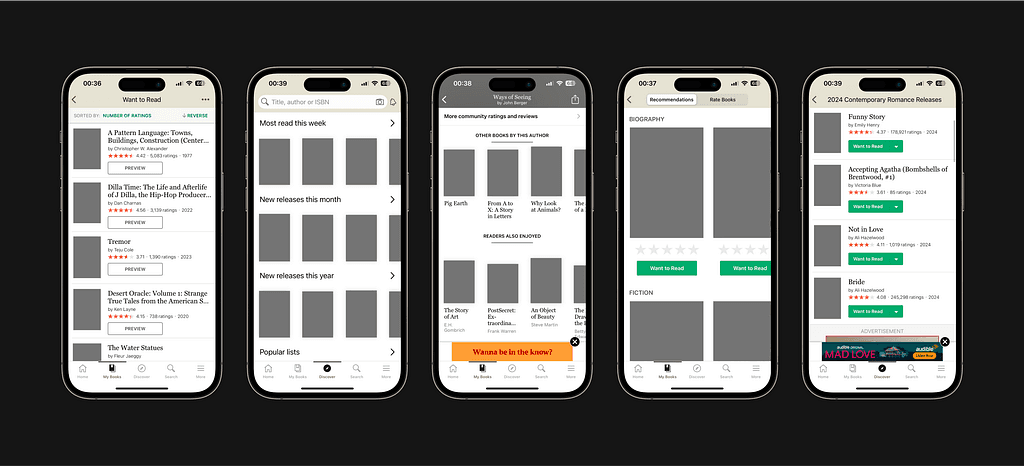
Range of the app’s book list styles
The main content, consisting of lists displaying book titles, authors, ratings, and publication years, lacks consistency with multiple list styles that seem disconnected.
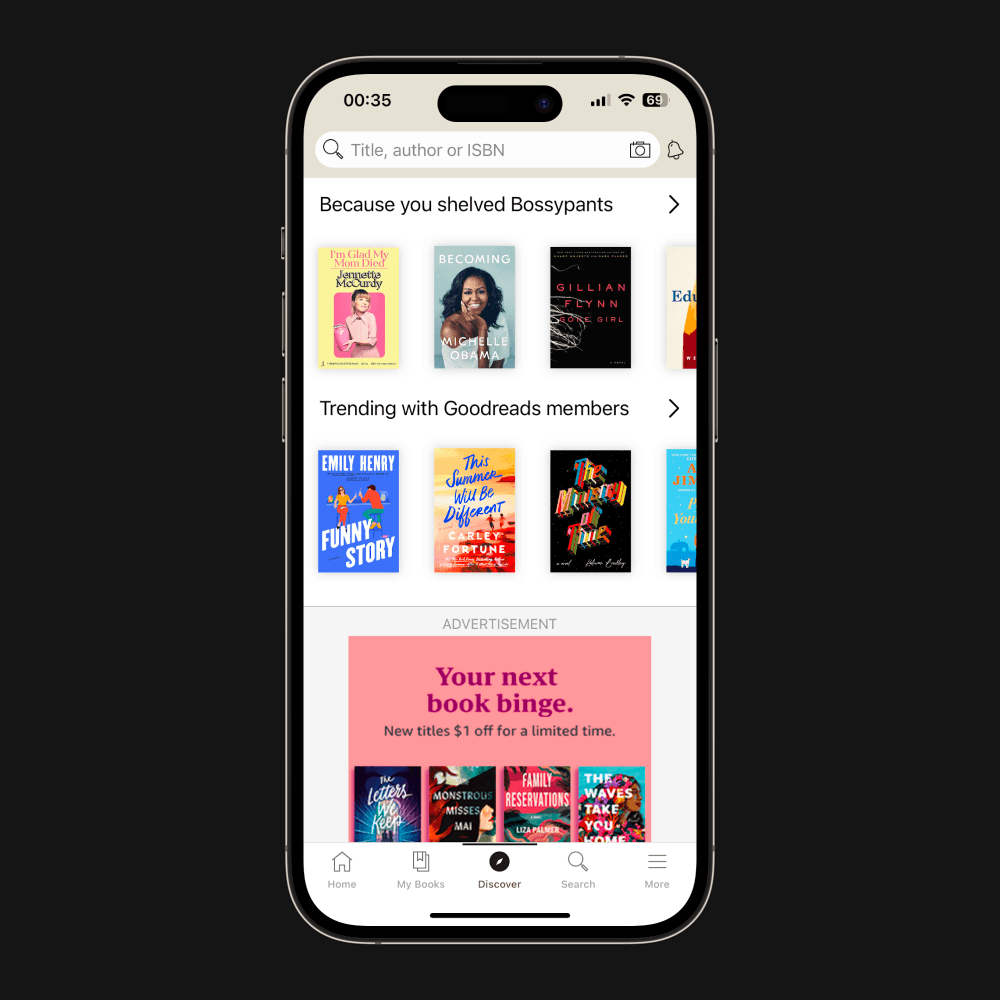
Ads featuring book covers mixing with book lists
Ads and miscellaneous graphics clutter the interface, overshadowing the book covers, which should be the focus.
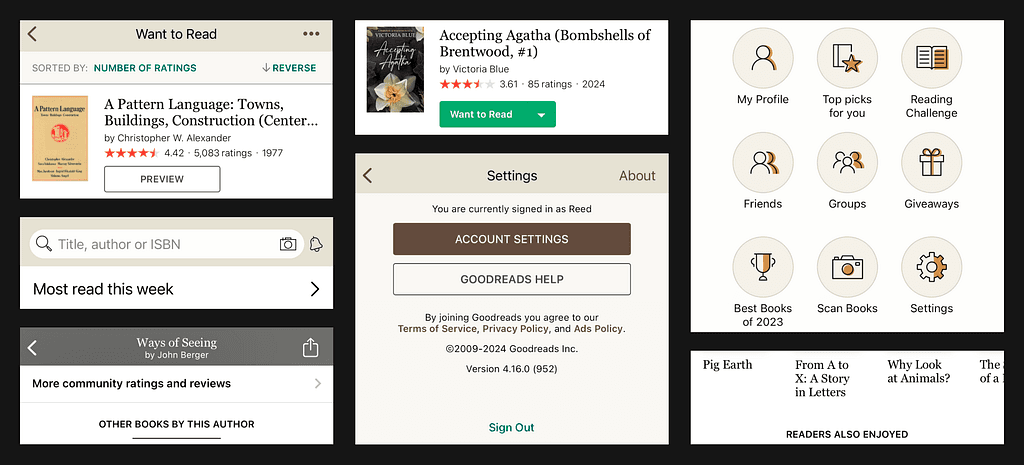
Range of the app’s type styles
The app suffers from a lack of typographical hierarchy with too many similar-sized fonts, a mix of left and center aligned text, and sentence and all uppercase capitalization.
Missed opportunities

The app overlooks modern iOS features such as haptics, which could enhance user interaction.

Personalization options like app icon changes or theme adjustments are missing, not catering to user preferences.

The absence of widgets is a significant oversight, considering their convenience for quick access to app functionalities.
Positioning Goodreads for success on iOS
Goodreads, backed by Amazon, remains the dominant player among iOS book tracking apps. However, its popularity is jeopardized by the fact that its app is aging and refusing to invest in a quality iOS experience. To remain competitive, Goodreads should focus on key areas: design improvements, missed platform-specific opportunities, and catering to expectations on iOS.
Meanwhile, young products like Bookshelf, coded in SwiftUI, are well-positioned to update seamlessly with Apple’s latest platform enhancements and even expand into emerging platforms like XR on VisionOS. This approach could potentially put them at the forefront, challenging established players like Goodreads.
Will Amazon place value in its book tracking product and overhaul the Goodreads iOS app, or might it consider acquiring another company with a superior iOS product to maintain its dominance?